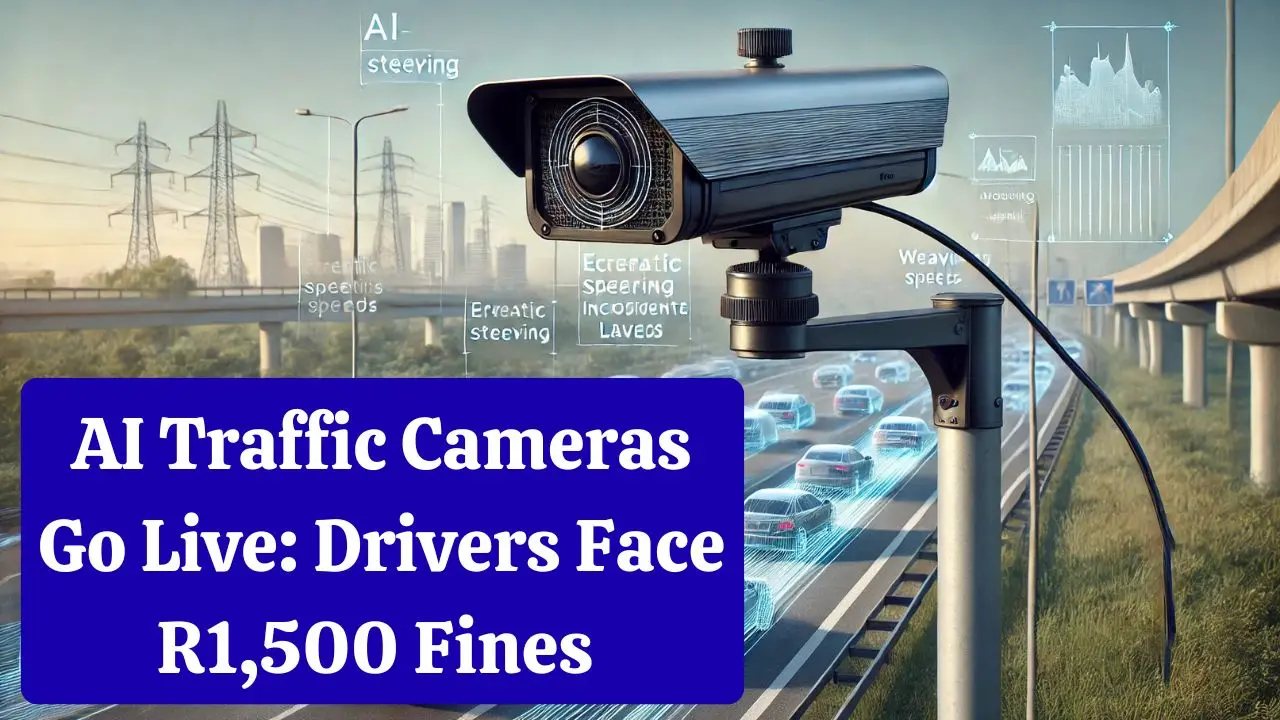
From 2025, motorists from South Africa will face AI empowered cameras which form part of a larger law enforcement system – ultimately bringing an end to the conventional fines. Under the new system, fines for AI-detected violations, such as speeding, could increase up to $1500, marking one of the most severe clamp-downs on traffic-related offenses in recent years.
Challenges for 08 January 2026 onwards
With effect from July 2026, traffic enforcement will highly rely on AI-based cameras installed along major highways, city roads, and high-accident spots. Such cameras are engineered to sense speeding, red-light infractions, lane-change offenses, and a plethora of other traffic wrongdoings in real time that would eliminate the requirement for manual surveillance by officers.
This Is Going to Be the Reason behind Why AI Cameras Are Being Introduced
It has been proposed by authorities that increasing fatalities, repeat offenders, and inconsistency in enforcement underscore the need for a necessary change in structured traffic enforcement. AI signifies capable, continuous surveillance-monitored law enforcements, staying impervious to external influences and subjectivities, and thus offers assurance that traffic laws can be uniformly enforced, irrespective of whether the offense occurs during the day or at night. This move will also help to reduce the corrupt nature and the margins of error in traffic policing.
The Mechanism of the R1,500 Penalty
In the new mechanisms, a camera-captured offense will trigger an automatic fine for the accused offender, with heavy sanctions or repeat offending attracting penalties of up to R1,500. The notifications, produced digitally, will be directly linked to the registered vehicle owner, minimizing undue delays and disputes common to traditional ticketing processes.
Such Violations Make for the Major Targets
The AI focuses on the most common high-risk behaviours that cause accidents and fatalities, such as driving too fast, running red lights, being distracted while driving, and unsafe lane changes as violations frequently detected by the cameras, making compliance with regulations ever more challenging for drivers.
Impact on South African Drivers
For regular car owners, it could mean being subject to sterner discipline and fewer chances to escape traffic benefits. Owing to decreased obstacles governing their traffic behaviour, drivers who have grown complacent with loose enforcement could earn themselves steeper fines. Meanwhile, those who obey the laws stand to benefit with safer streets and a stronger hammer of discipline.
There have been concerns and reactions of the public. They welcome the big guns on road safety, while the selfsame motorists registered concerns about heavy fines and some complained that there was no human factor and discretion in the process. Authorities, meanwhile, underscore that their emphasis is deterrence and not punishment and with safety improvements being the intended effect.
There are a number of new rules that will be put into motion and will be enforced in the best interest of drivers, these being the use of cameras to monitor everything from traffic lights to speed limits along with large fines.
A New Page for Road Safety
From January 8th, 2026, the new age underpinned by R1500 infringement fines and AI cameras will induct us into a fresh era of enforcement. South African motorists will have to comply with a new order embossed with respect from technology, meaning that compliance, docility, and responsible driving is happily no longer up for guesswork or chance operation.